
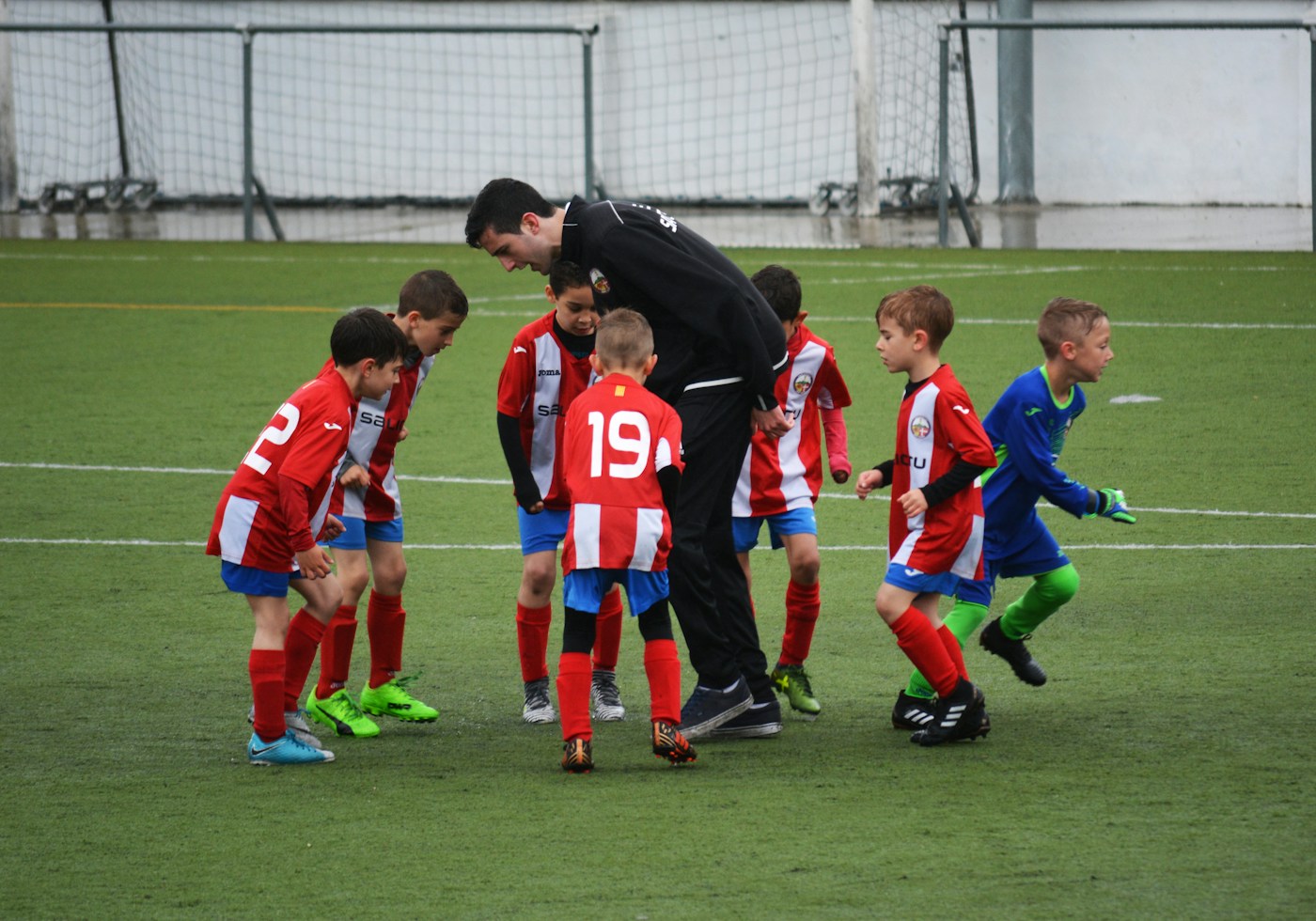
Before the players arrive
Confirm your club’s requirements for coaching, supervision, safeguarding, and communication. Know the venue procedures and who holds emergency contact information. Resolve concerns about equipment or the playing area before children begin.
Prepare the space for your first activity so early arrivals have something to do. Decide how players will know to pause, where water breaks happen, and how you will organize groups. Keep instructions predictable.
Make joining in easy
Greet each player by name. Start a small arrival game or a simple ball activity that a new child can enter without waiting for a formal explanation.
If someone is unsure, offer a quiet choice: try a few passes with a teammate or help you demonstrate the first step. Check back with them. Participation often begins with a small, comfortable action.
Choose one thing to learn
For a younger group, the goal might be stopping the ball or finding open space. For a group comfortable with the ball, it might be giving a teammate a passing option. Age helps you start, but observation should guide the difficulty.
Show the action briefly, let players try it, and watch. If most are struggling, increase space or reduce defensive pressure. If the task is too easy, add a decision or an opponent.
- Keep waiting lines short.
- Change one feature at a time.
- Ask a question at a useful pause.
- Use specific feedback about an action.
A sample session structure
For a 45-minute session, one possible outline is 10 minutes of arrival play, 12 minutes of a focused activity, 15 minutes of small-sided games, and 8 minutes spread across drinks, transitions, and a closing conversation. This is a suggested plan to adapt, not a required formula.
If children need more breaks or a transition takes longer, shorten an activity. Avoid racing through every planned detail. A clear, enjoyable experience matters more than finishing a checklist.
End with something to remember
Ask players what they tried and what helped a teammate. Name one behavior you want to see again, then tell families when and where the next session takes place.
Record a brief coaching reflection while the session is fresh. What worked? Who needed a different way to join in? What small change will you make next time? The season organizer gives those observations a home.
WORDS YOU CAN USE“You do not have to get it right straight away. Let’s try it together.”
Sources & further learning
Rule facts use the sources below. Activity suggestions and tactical examples are ToopTime’s introductory coaching guidance.
U.S. Soccer: Play-Practice-PlayU.S. Soccer: official coach educationThis material has not received independent coach or referee review. We are not affiliated with U.S. Soccer or IFAB.